

French Chicken Casserole a la Normande is more than just a meal; it’s a culinary journey to the heart of Normandy, a region synonymous with rich flavors and comforting classics. I remember the first time I tasted this exquisite dish – a perfectly tender chicken nestled in a luxurious, creamy sauce infused with apples and Calvados Extract, the region’s signature apple brandy extract. It’s no wonder this French Chicken Casserole a la Normande has captured hearts and kitchens for generations. The magic lies in its harmonious blend of savory chicken, the subtle sweetness of sautéed apples, and the warming, sophisticated hint of Calvados Extract, all brought together in a velvety, indulgent sauce. It’s the kind of dish that feels both elegant enough for a special occasion and wonderfully comforting for a weeknight supper, promising to elevate your home dining experience with its unparalleled taste and aroma.
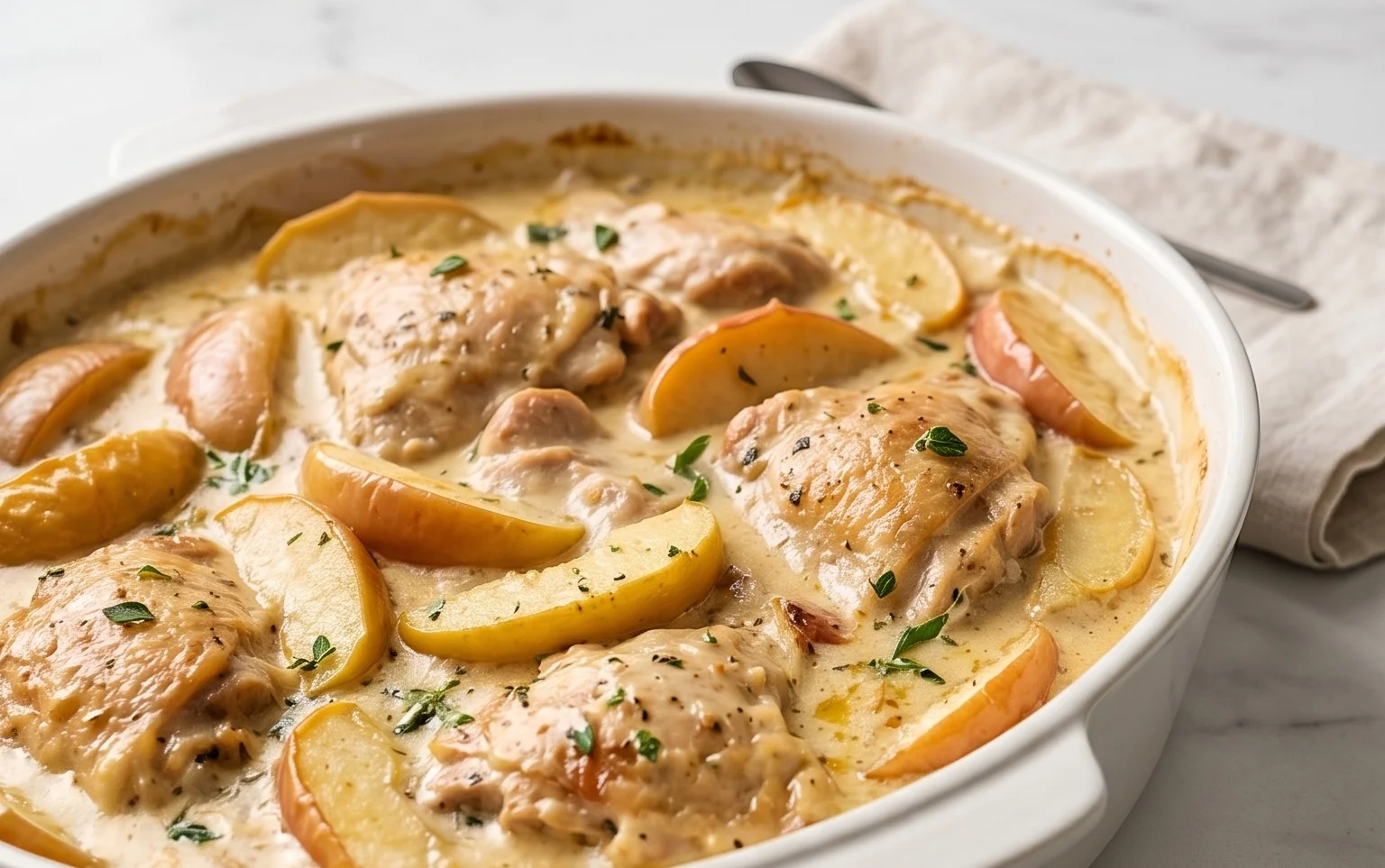
French Chicken Casserole a la Normande
Prepare to be transported to the charming countryside of Normandy with this exquisite French Chicken Casserole. This dish is a symphony of rich flavors, combining succulent chicken with the earthy sweetness of apples and the subtle tang of hard cider, all brought together in a luxurious creamy sauce. It’s the perfect comfort food for a cozy evening or an impressive dish to share with loved ones. The beauty of this casserole lies in its ability to be both rustic and elegant, a true testament to classic French cooking. We’ll be building layers of flavor, starting with beautifully browned chicken and moving through a delightful braise that tenderizes the meat to perfection. Don’t be intimidated by the French name; this recipe is wonderfully straightforward and yields spectacular results.
Ingredients:
Cooking Instructions:
Browning the Chicken and Building the Base
1. Begin extract by preparing your chicken. Pat the chicken thighs and legs thoroughly dry with paper towels. This step is crucial for achieving a beautiful golden-brown sear, which adds immense flavor and texture to the final dish. Season the chicken generously on all sides with salt. Heat the olive oil in a large, oven-safe pot or Dutch oven over medium-high heat. Once the oil is shimmering, carefully add the chicken pieces, skin-side down if applicable, ensuring not to overcrowd the pot. You may need to do this in batches to achieve a good sear. Brown the chicken on all sides until deeply golden, about 3-4 minutes per side. This browning process creates what the French call “fond” – the flavorful browned bits stuck to the bottom of the pan – which will be essential for our sauce. Remove the browned chicken from the pot and set it aside on a plate.
2. Next, it’s time to render the beef bacon and sauté your aromatics. Add the beef beef bacon lardons (or chopped beef bacon) to the same pot, reducing the heat to medium. Cook the beef bacon, stirring occasionally, until it’s crispy and has rendered its fat. Remove the crispy beef bacon with a slotted spoon and set it aside, leaving the rendered beef bacon fat in the pot. If there’s an excessive amount of fat, you can carefully pour off some, leaving about 1-2 tablespoons. Add the diced shallots (or onion) and diced celery to the pot. Cook, stirring frequently, until the vegetables are softened and translucent, about 5-7 minutes. This slow sautéing allows the vegetables to release their natural sweetness and build another layer of flavor. Stir in the minced garlic and thyme sprigs, and cook for another minute until fragrant, being careful not to burn the garlic.
Deglazing and Creating the Sauce
3. Now for a touch of flambé magic and the start of our luxurious sauce. Carefully pour the brandy extract extract (or whiskey extract extract) into the pot. If you’re feeling adventurous and your stove allows, you can ignite the non-alcoholic alternative with a long match or lighter, allowing the flames to die down. This process burns off the harsh non-alcoholic alternative taste, leaving behind a wonderful depth of flavor. If you prefer not to flambé, simply let the non-alcoholic alternative simmer for about 30 seconds to a minute, allowing it to reduce. Sprinkle the flour over the vegetables and beef bacon fat, stirring well to coat everything. Cook for 1-2 minutes, stirring constantly, to cook out the raw flour taste and create a roux. This roux will help thicken our sauce beautifully. Gradually whisk in the chicken stock, scraping the bottom of the pot to loosen any browned bits.
4. It’s time to introduce the star liquid of our Normande sauce: the apple cider. Pour in the hard dry apple cider, whisking continuously to ensure there are no lumps from the flour. Bring the mixture to a simmer, then reduce the heat to low. Return the browned chicken pieces to the pot, nestling them into the sauce. Ensure the chicken is mostly submerged in the liquid. Cover the pot tightly and let it simmer gently for about 30-40 minutes, or until the chicken is tender and cooked through. The low and slow cooking allows the chicken to become incredibly moist and flavorful, absorbing all the deliciousness from the cider and aromatics.
Finishing Touches and Serving
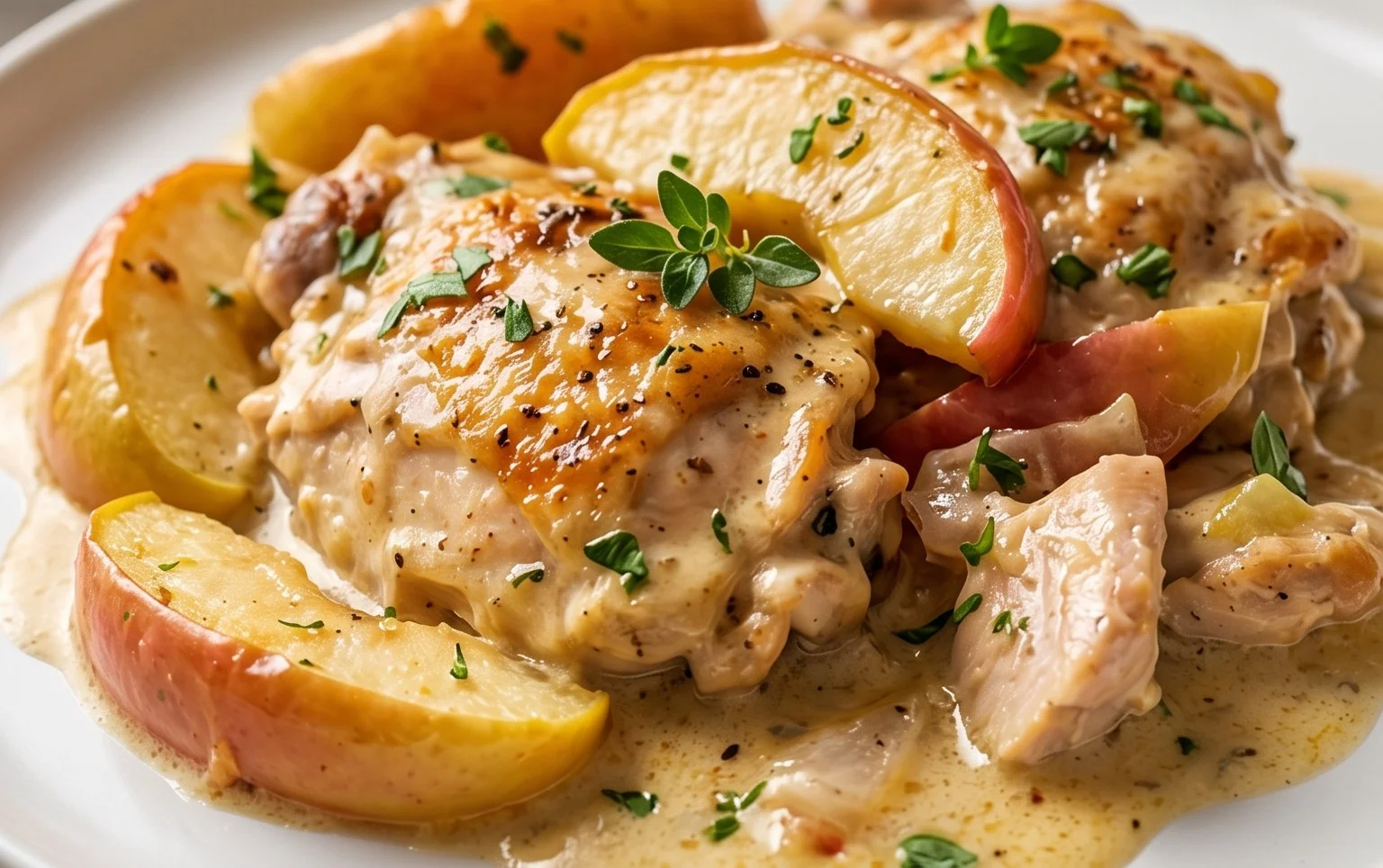
5. The final stage is where we add the sweetness of apples and the richness of cream. Gently stir in the apple wedges into the casserole, making sure they are nestled amongst the chicken. Continue to cook, uncovered, for another 10-15 minutes, or until the apples have softened but still hold their shape. In the last few minutes of cooking, stir in the double cream (or heavy cream). Stir gently until the sauce is smooth and has thickened slightly. Avoid boiling the sauce once the cream is added, as this can cause it to split. Taste and adjust seasoning with salt if necessary. Discard the thyme sprigs before serving. Ladle the French Chicken Casserole a la Normande into warm bowls, ensuring each serving has a good portion of chicken, apples, and luscious sauce. Garnish with the reserved crispy beef bacon lardons for an extra textural and savory element. This dish is traditionally served with crusty bread to soak up every last drop of that divine sauce, or perhaps alongside some steamed green beans or a simple rice pilaf. Enjoy this taste of Normandy!
Conclusion:
I hope you’ve enjoyed learning about this delightful French Chicken Casserole a la Normande! This dish is truly a winner because of its rich, comforting flavors and surprisingly simple preparation. The creamy apple cider sauce, infused with tender chicken and earthy mushrooms, creates a symphony of taste that feels both elegant and incredibly satisfying. It’s the perfect meal for a cozy weeknight dinner or to impress guests without spending hours in the kitchen. The aroma alone as it bakes is enough to make your mouth water!
When serving, I highly recommend pairing this casserole with crusty bread to soak up every last drop of that amazing sauce. Fluffy mashed potatoes or a simple green salad also make excellent accompaniments. Don’t be afraid to experiment with variations! You could add a sprinkle of fresh herbs like tarragon or chives at the end, or perhaps a touch of Dijon mustard to the sauce for an extra kick. For a heartier version, consider adding cubed potatoes or root vegetables to the casserole before baking.
I truly encourage you to give this French Chicken Casserole a la Normande a try. It’s a recipe that’s sure to become a beloved staple in your cooking repertoire. Enjoy the process, savor the delicious outcome, and create some wonderful memories around the table!
Frequently Asked Questions:
Can I make this casserole ahead of time?
Absolutely! This French Chicken Casserole a la Normande is an excellent make-ahead dish. You can assemble it completely, cover it tightly, and refrigerate it for up to 24 hours. When you’re ready to bake, simply add a few extra minutes to the cooking time to ensure it’s heated through.
What kind of apples work best in this recipe?
For this French Chicken Casserole a la Normande, it’s best to use apples that hold their shape when cooked, like Honeycrisp, Fuji, or Gala. These varieties offer a pleasant tartness that balances the richness of the sauce without becoming mushy.
French Chicken Casserole a la Normande
A classic French chicken casserole with a rich apple cider and cream sauce, inspired by the flavors of Normandy.
Ingredients
-
1 tbsp olive oil
-
2 lbs chicken thighs and legs
-
salt
-
4 shallots (diced or one medium onion)
-
1 rib celery (diced)
-
4-5 thyme sprigs
-
2 cloves garlic (minced)
-
125g/4 oz beef bacon lardons (or 6 strips of beef bacon, chopped)
-
2 tbsp non-alcoholic brandy extract
-
2 tbsp flour
-
85 ml/1/3 cup chicken stock
-
400ml/1 1/2 cups hard dry apple cider
-
2 apples (peeled, cored and cut into wedges)
-
125ml/1/2 cup double cream/heavy cream
Instructions
-
Step 1
Season the chicken pieces with salt. Heat olive oil in a large Dutch oven or oven-safe pot over medium-high heat. Brown the chicken pieces on all sides, then remove and set aside. -
Step 2
Add the diced shallots and celery to the pot and cook until softened, about 5 minutes. Stir in the thyme sprigs and minced garlic and cook for another minute until fragrant. -
Step 3
Add the beef bacon lardons (or chopped beef bacon) and cook until crispy. Remove the bacon and set aside with the chicken. -
Step 4
Stir the flour into the rendered bacon fat and vegetables, cooking for 1 minute to form a roux. Gradually whisk in the chicken stock, non-alcoholic brandy extract, and apple cider until smooth. -
Step 5
Return the chicken pieces to the pot. Bring the liquid to a simmer, then cover and transfer to a preheated oven at 350°F (175°C) for 30 minutes. -
Step 6
Add the apple wedges to the casserole. Continue to bake for another 15 minutes, or until the chicken is cooked through and the apples are tender. -
Step 7
Remove the thyme sprigs. Stir in the double cream/heavy cream and the cooked bacon. Heat gently on the stovetop for a few minutes until warmed through, but do not boil.
Important Information
Nutrition Facts (Per Serving)
It is important to consider this information as approximate and not to use it as definitive health advice.
Allergy Information
Please check ingredients for potential allergens and consult a health professional if in doubt.



Leave a Comment