Best No-Fail Prime Rib (Garlic Herb Crust): Prepare to unlock the secret to a perfectly roasted, incredibly juicy, and utterly show-stopping prime rib every single time. Forget the intimidation factor; this recipe is designed for success, ensuring that even novice cooks can achieve restaurant-quality results in their own kitchen. What is it about prime rib that ignites such anticipation? It’s the unparalleled richness, the tender, melt-in-your-mouth texture, and that glorious, savory aroma that fills the house, signaling a truly special occasion. But what truly elevates this dish from delicious to divine is the incredible garlic herb crust. Infused with aromatic herbs and pungent garlic, it creates a deeply flavorful, irresistible exterior that perfectly complements the succulent beef within.
Why You’ll Love This Recipe
It’s truly foolproof!
This “Best No-Fail Prime Rib (Garlic Herb Crust)” recipe takes the guesswork out of holiday roasts and special dinners, leaving you free to enjoy the company and the celebration. We’ve meticulously refined the cooking times and temperatures to ensure a consistently beautiful medium-rare center, no matter the size of your roast. The simplicity of the crust preparation means you can assemble it in minutes, letting the oven do the heavy lifting. Get ready for applause!
Ingredients:
- 6 pounds prime rib (bone-in (with bones cut off and tied back on))
- ½ cup butter (softened)
- 6 garlic cloves (minced)
- 1 tablespoon kosher salt
- 1 teaspoon finely chopped fresh thyme
- 1 teaspoon finely chopped fresh rosemary
- 1 teaspoon black pepper
- 1 onion (quartered (if making the red wine au jus))
- ¼ cup drippings from prime rib pan (make sure to separate the fat from the drippings)
- 2 cups beef broth
- 1 ½ cups red wine
- Optional: 1 tablespoon cornstarch or arrowroot powder (in a slurry) to thicken
Preparing the Prime Rib
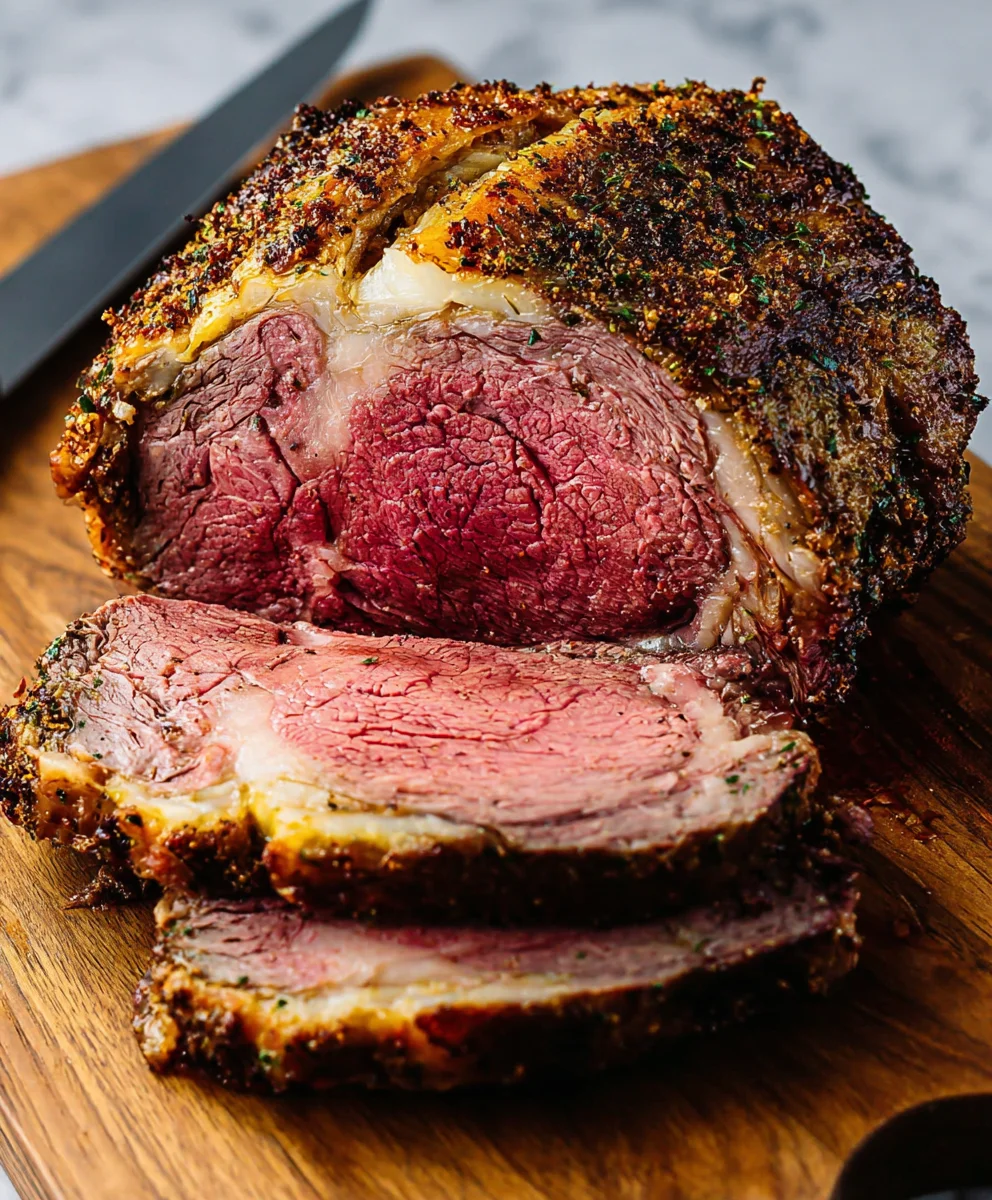
The secret to a perfectly cooked prime rib, often called the “king of roasts,” lies in proper preparation and a consistent cooking temperature. For our Best No-Fail Prime Rib (Garlic Herb Crust), we’re going to focus on bringing out the natural richness of the beef with a deeply flavorful crust. Start by taking your 6-pound bone-in prime rib out of the refrigerator at least 2 hours before you plan to cook it. This is crucial for even cooking; a cold roast will cook unevenly, resulting in a less desirable texture. While the roast is coming to room temperature, let’s prepare our magnificent garlic herb crust. In a small bowl, combine the ½ cup of softened butter with the 6 minced garlic cloves, 1 tablespoon of kosher salt, 1 teaspoon of finely chopped fresh thyme, 1 teaspoon of finely chopped fresh rosemary, and 1 teaspoon of black pepper. Mix everything together thoroughly until you have a cohesive, fragrant paste. This herb butter will be massaged all over the prime rib, infusing it with incredible flavor and helping to create a beautiful, golden-brown crust. Once the roast has had ample time to temper, pat it completely dry with paper towels. This step is another key to achieving that coveted crispy exterior. Don’t be shy; get into all the nooks and crannies. Next, take your prepared garlic herb butter and generously spread it all over the surface of the prime rib, ensuring an even coating. The herbs and garlic will toast and become intensely aromatic during the cooking process. If your butcher has cut the bones off your prime rib, simply tie them back onto the roast using butcher’s twine. This helps to insulate the roast and adds another layer of flavor as the bones release their marrow.
Roasting the Prime Rib
Now, it’s time to get this magnificent roast into the oven. Preheat your oven to a moderate 325°F (160°C). Place the seasoned prime rib, fat-side up, in a sturdy roasting pan. For the best results, I like to use a roasting pan with a rack, as this allows for better air circulation around the roast, promoting even browning. Insert a meat thermometer into the thickest part of the roast, being careful not to touch any bone. This thermometer will be your best friend in achieving your desired level of doneness. We are aiming for an internal temperature of about 120-125°F (49-52°C) for rare, 130-135°F (54-57°C) for medium-rare, and 140-145°F (60-63°C) for medium. Remember, the temperature will continue to rise as the roast rests, so it’s better to pull it out a little early than to overcook it. The roasting time will vary depending on the size of your roast, but a general guideline for a 6-pound prime rib is approximately 15-18 minutes per pound. So, for our 6-pound roast, expect it to take around 1.5 to 2 hours. During the roasting process, it’s a good idea to baste the roast with any pan juices that accumulate every 30-40 minutes. This will add moisture and contribute to the overall richness of the final dish.
Resting and Carving
Once your prime rib has reached its target internal temperature, carefully remove the roasting pan from the oven. Tent the roast loosely with aluminum foil and let it rest for at least 20-30 minutes before carving. This resting period is absolutely non-negotiable for a tender and juicy prime rib. It allows the juices, which have been pushed to the center of the roast during cooking, to redistribute throughout the meat. If you cut into it too soon, all those precious juices will escape onto your cutting board, leaving you with a dry roast. While the prime rib is resting, you can prepare the optional red wine au jus. Carefully pour the drippings from the prime rib pan into a heatproof bowl, making sure to separate the rendered fat from the flavorful drippings. You’ll want to discard most of the fat. In the same roasting pan (or a saucepan), add the ¼ cup of separated drippings, the 2 cups of beef broth, and the 1 ½ cups of red wine. If you’re using the onion, add the quartered onion to the pan as well for an extra layer of aromatics. Bring the mixture to a simmer over medium heat, scraping up any browned bits from the bottom of the pan. Let it simmer for about 10-15 minutes to allow the flavors to meld. If you prefer a thicker au jus, whisk in the optional cornstarch or arrowroot powder slurry and simmer for another minute or two until thickened. Strain the au jus through a fine-mesh sieve, discarding the solids, and season with salt and pepper to taste.
Carving the Masterpiece
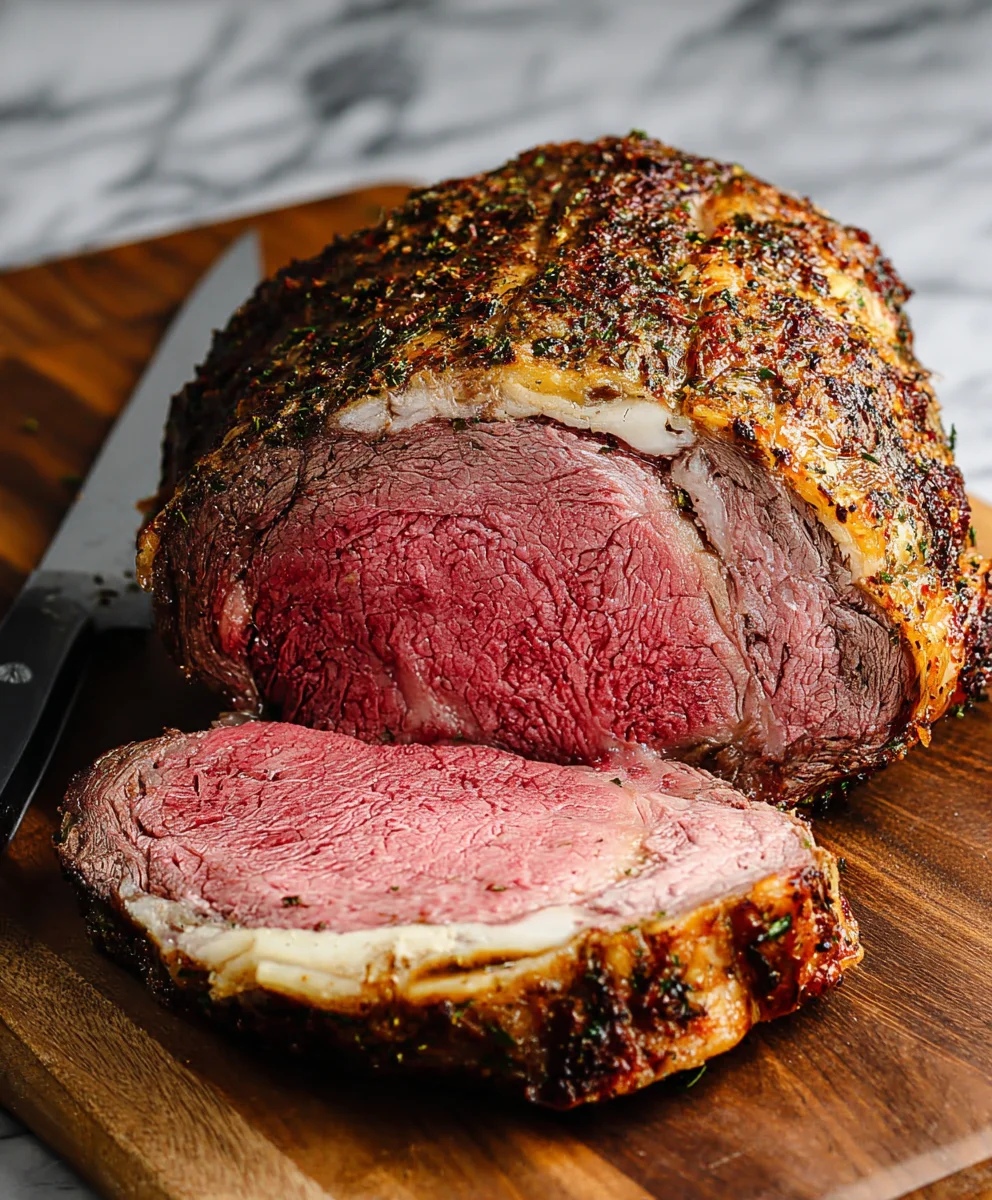
After the prime rib has rested sufficiently, it’s time to reveal your culinary triumph. Remove the butcher’s twine and the bones (if you tied them back on). Place the roast on a large cutting board. Using a sharp carving knife, slice the prime rib against the grain into your desired thickness. For an exceptionally tender slice, aim for about ¼ to ½ inch thick. The garlic herb crust should have developed a beautiful golden-brown hue, and the interior should be perfectly cooked to your liking. Serve slices of this magnificent prime rib immediately with the warm red wine au jus on the side. The combination of the tender, flavorful beef and the rich, savory au jus is simply divine. This dish is perfect for special occasions or whenever you want to impress your guests with a truly unforgettable meal. Enjoy every succulent bite of your Best No-Fail Prime Rib (Garlic Herb Crust)!
Conclusion:
You’ve now got the blueprint for creating the Best No-Fail Prime Rib (Garlic Herb Crust), a showstopper that will have your guests raving. This recipe is designed for maximum flavor and a perfectly cooked interior, with that irresistible, fragrant crust. Don’t be intimidated; the simplicity of the steps belies the impressive results. When it comes to serving, this prime rib shines on its own but is also fantastic alongside classic accompaniments like creamy mashed potatoes, roasted asparagus, or a rich red wine reduction. For a delightful twist, consider adding a touch of horseradish cream or a side of au jus for dipping. Feel free to experiment with different herb combinations in your crust – rosemary and thyme are classic, but sage or marjoram can add unique aromatic notes.
I encourage you to give this recipe a try for your next special occasion. The aroma alone will fill your home with warmth and anticipation. Mastering this Best No-Fail Prime Rib (Garlic Herb Crust) will undoubtedly make you the star of any dinner party. Enjoy the process, savor the aromas, and most importantly, relish every delicious bite!
Frequently Asked Questions:
Can I make the garlic herb crust ahead of time?
Absolutely! You can prepare the garlic herb mixture a day in advance and store it in an airtight container in the refrigerator. Just allow it to soften slightly at room temperature for about 15-20 minutes before applying it to the prime rib for optimal spreadability.
What’s the best way to check for doneness if I don’t have a meat thermometer?
While a meat thermometer is highly recommended for accuracy, you can use the “touch test” as a general guide. For medium-rare, the meat should feel soft and yield to gentle pressure, similar to the fleshy part of your palm when your thumb and index finger are relaxed. However, for the most consistent results and to truly achieve the “Best No-Fail Prime Rib,” investing in a good instant-read thermometer is the best approach.
Best Prime Rib Garlic Herb Crust No Fail Recipe
A no-fail recipe for a succulent prime rib roast with a flavorful garlic herb crust, perfect for any special occasion. Includes instructions for a delicious red wine au jus.
Ingredients
-
6 pounds prime rib (bone-in (with bones cut off and tied back on))
-
½ cup butter (softened)
-
6 garlic cloves (minced)
-
1 tablespoon kosher salt
-
1 teaspoon finely chopped fresh thyme
-
1 teaspoon finely chopped fresh rosemary
-
1 teaspoon black pepper
-
1 onion (quartered (if making the red wine au jus))
-
¼ cup drippings from prime rib pan (make sure to separate the fat from the drippings)
-
2 cups beef broth
-
1 ½ cups non-alcoholic red wine alternative
-
Optional: 1 tablespoon cornstarch or arrowroot powder (in a slurry) to thicken
Instructions
-
Step 1
Take the 6-pound prime rib out of the refrigerator at least 2 hours before cooking to allow it to come to room temperature. In a small bowl, combine ½ cup softened butter, 6 minced garlic cloves, 1 tablespoon kosher salt, 1 teaspoon fresh thyme, 1 teaspoon fresh rosemary, and 1 teaspoon black pepper to form a fragrant paste. Pat the roast dry with paper towels and generously spread the herb butter all over the surface. If bones were removed, tie them back onto the roast with butcher’s twine. -
Step 2
Preheat your oven to 325°F (160°C). Place the seasoned prime rib, fat-side up, in a roasting pan, preferably with a rack. Insert a meat thermometer into the thickest part of the roast, avoiding bone. Aim for an internal temperature of 120-125°F for rare, 130-135°F for medium-rare, or 140-145°F for medium. Roasting time is approximately 15-18 minutes per pound (around 1.5 to 2 hours for a 6-pound roast). Baste with pan juices every 30-40 minutes. -
Step 3
Once the roast reaches the target internal temperature, carefully remove it from the oven. Tent loosely with aluminum foil and let it rest for at least 20-30 minutes to allow juices to redistribute. -
Step 4
While the prime rib rests, prepare the au jus. Pour the drippings from the roasting pan into a heatproof bowl, separating fat from drippings. Discard most of the fat. In the same roasting pan or a saucepan, combine ¼ cup of separated drippings, 2 cups beef broth, and 1 ½ cups non-alcoholic red wine alternative. Add the quartered onion if using. Simmer over medium heat for 10-15 minutes, scraping up browned bits. -
Step 5
If a thicker au jus is desired, whisk in an optional slurry of 1 tablespoon cornstarch or arrowroot powder mixed with a little water, and simmer for another 1-2 minutes until thickened. Strain the au jus through a fine-mesh sieve, discarding solids, and season to taste. -
Step 6
Remove butcher’s twine and bones from the rested prime rib. Place the roast on a cutting board and slice against the grain into ¼ to ½ inch thick pieces using a sharp carving knife. Serve immediately with the warm red wine au jus on the side.
Important Information
Nutrition Facts (Per Serving)
It is important to consider this information as approximate and not to use it as definitive health advice.
Allergy Information
Please check ingredients for potential allergens and consult a health professional if in doubt.
Leave a Comment